Top Ad 728x90

dimanche 25 janvier 2026

1 tablespoon a day and your liver will be clean! It cures all diseases. All impurities are removed.

by


In a world full of fast food, stress, sleepless nights, and endless toxins, it’s no surprise that people are desperately searching for simple, natural ways to feel better. That’s why a bold claim like “Just one tablespoon a day and your liver will be clean, all impurities removed, and your body healed” spreads so quickly.

It sounds comforting. Hopeful. Almost magical.

But what’s the real story behind this popular idea? Can a simple daily tablespoon truly support your liver — or is it just another internet myth dressed up as wellness advice?

Let’s slow down, look deeper, and uncover what’s actually happening inside your body.


Why the Liver Is So Important (And So Often Ignored)

Your liver is one of the hardest-working organs you have. Every single day, it:

  • Filters toxins from your blood

  • Breaks down alcohol and medications

  • Converts nutrients into usable energy

  • Produces bile to help digest fats

  • Supports hormone balance

  • Plays a role in immune defense

Unlike many organs, the liver doesn’t complain loudly when something is wrong. Damage often happens quietly, over time. That’s why liver health has become such a hot topic — and why people are drawn to “cleanses” and miracle remedies.


The Viral One-Tablespoon Remedy Explained

Most versions of this popular remedy include natural ingredients such as:

  • Extra-virgin olive oil

  • Lemon juice

  • Honey (sometimes optional)

Taken in the morning on an empty stomach, supporters claim this mixture:

  • “Flushes” toxins from the liver

  • Activates digestion

  • Cleanses impurities

  • Restores liver strength

  • Improves energy and skin

  • Prevents disease

It sounds impressive — but to understand the truth, we must first understand how the liver actually works.


The Truth: Your Liver Already Detoxes Itself

Here’s the most important fact most viral articles leave out:

👉 Your liver does not need to be “cleaned.”

The liver is your body’s natural detox system. It already removes toxins constantly — day and night — without any special drinks, pills, or rituals.

There is no scientific evidence that a specific food or mixture can suddenly “wash” toxins out of your liver like soap through a pipe. That idea may sound logical, but the body simply doesn’t work that way.

This doesn’t mean natural ingredients are useless — it means their benefits are supportive, not miraculous.


So What Does a Tablespoon a Day REALLY Do?

Let’s look honestly at the ingredients often used in this remedy.

Olive Oil

Extra-virgin olive oil is rich in healthy fats and antioxidants. When consumed in moderation, it can support heart health, reduce inflammation, and help digestion by stimulating bile flow.

This bile helps digest fats — not “flush toxins,” but support digestion, which indirectly benefits overall metabolism.

Lemon Juice

Lemon juice contains vitamin C and antioxidants. Many people enjoy it for digestive comfort and hydration. Starting the day with lemon water can encourage fluid intake, which is always beneficial.

However, lemon juice does not detox the liver or remove impurities in a dramatic way.

Honey

Honey contains antioxidants and has traditional uses in natural wellness. Still, it is sugar. In excess, sugar actually puts more stress on the liver, especially in people with fatty liver issues.


Why the Claim “Cures All Diseases” Is Dangerous

No single food, drink, or tablespoon can cure all diseases.

Statements like this are misleading and can even be harmful if people delay proper medical care believing a home remedy will fix everything.

Liver diseases such as fatty liver, hepatitis, fibrosis, or cirrhosis require medical diagnosis and management. Natural habits can support recovery — but they cannot replace treatment.


When You Should Actually Worry About Your Liver

You should never ignore symptoms such as:

  • Persistent fatigue

  • Yellowing of the skin or eyes

  • Abdominal pain on the right side

  • Dark urine or pale stools

  • Unexplained nausea

These are not signs that you need a cleanse — they are signs that you need professional medical attention.


What Truly Supports Liver Health (Long-Term)

Instead of chasing quick fixes, here’s what truly helps your liver thrive:

1. Eat Real Food

Whole foods like vegetables, fruits, legumes, lean protein, and healthy fats reduce liver stress.

2. Reduce Sugar and Processed Foods

Excess sugar and refined carbs are major contributors to fatty liver disease.

3. Drink Enough Water

Hydration supports every metabolic process in your body, including waste removal.

4. Move Your Body

Regular physical activity helps reduce fat accumulation in the liver and improves insulin sensitivity.

5. Limit Alcohol

Alcohol is one of the fastest ways to damage liver tissue over time.

6. Sleep Well

Your liver performs essential metabolic repair during deep sleep.


So Is the Daily Tablespoon Useless? Not at All

Here’s the balanced truth:

A daily tablespoon of olive oil, lemon, or similar natural ingredients can be part of a healthy routine. It may:

  • Encourage better digestion

  • Promote hydration

  • Add beneficial nutrients

  • Create a mindful morning habit

But it is not a detox, not a cure, and not a replacement for healthy living.

The real benefit comes from consistency, balance, and lifestyle — not from a single spoon.


Final Thoughts

The idea that “one tablespoon a day cleans your liver and removes all impurities” is comforting — but misleading.

Your liver doesn’t need miracles.
It needs support, respect, and time.

When you nourish your body properly, stay active, sleep well, and reduce harmful habits, your liver does exactly what it was designed to do — naturally and efficiently.

There is no magic spoon.
But there is a smart way to care for your body — and it starts with truth, not hype.

I make this every night and haven’t gained a single pound. It’s the only cake I can eat after dinner. It’s only 90 calories!

by


I Make This Every Night and Haven’t Gained a Single Pound

The Only Cake I Eat After Dinner — And It’s Just 90 Calories

For years, dessert felt like a reward I had to earn—or worse, a mistake I had to “fix” the next day. If I ate cake after dinner, I’d feel full of regret instead of joy. Sound familiar?

Somewhere along the way, dessert became moralized. Cake was “bad.” Discipline meant saying no. And weight maintenance meant pretending cravings didn’t exist.

But here’s the truth I’ve learned the slow, freeing way:

The problem was never dessert. The problem was portion size, ingredients, and the all-or-nothing mindset around food.

Now? I eat cake every single night.
After dinner.
No guilt.
No “starting over tomorrow.”
And I haven’t gained a single pound.

This is the only cake I eat after dinner—and it’s only 90 calories.

Not a “diet” cake.
Not a sad substitute.
A real, warm, comforting cake that satisfies the craving so completely I don’t even think about food afterward.

Let me show you why this works—and why it might change the way you think about dessert forever.


Why I Refused to Give Up Cake

I’ve never been the kind of person who can “just have fruit” when I want dessert.

I don’t want crunchy apples.
I don’t want a square of dark chocolate I have to ration.
And I definitely don’t want to spend my evenings bargaining with myself.

When I want cake, I want cake:

  • Soft

  • Warm

  • Slightly sweet

  • Comforting

So instead of fighting that craving, I decided to design around it.

I asked myself:

  • What if cake could fit into my daily routine?

  • What if dessert didn’t have to be a special occasion?

  • What if the solution wasn’t less enjoyment, but less excess?

That question led me to this cake.


The 90-Calorie Cake I Make Every Night

This is a single-serving cake, made in minutes, using simple ingredients. No frosting towers. No sugar crash. No leftovers calling your name from the kitchen.

It’s intentionally small—but deeply satisfying.

Why This Cake Works

  • It’s portion-controlled

  • It’s lower in calories, not zero-calorie

  • It’s high in volume for the calories

  • It’s warm, which increases satisfaction

  • It scratches the exact dessert itch

This isn’t about tricking yourself.
It’s about meeting the craving where it is.


A Quick Look at the Ingredients (And Why They Matter)

While there are dozens of ways to make a low-calorie cake, the version I make relies on a few smart swaps that don’t feel like punishment.

1. A Light Base Instead of Heavy Flour

Using a small amount of oat flour or a finely blended oat base keeps the cake tender without loading it with calories.

Oats bring:

  • Mild sweetness

  • Structure

  • A comforting, cake-like texture

2. Cocoa Powder for Big Flavor

Cocoa powder is one of the highest-impact, lowest-calorie ingredients you can use.

A tablespoon adds:

  • Rich chocolate flavor

  • Almost no calories

  • Serious dessert vibes

3. Sweetness Without the Spike

Instead of sugar, this cake uses a calorie-free or very low-calorie sweetener.

The goal isn’t “no sweetness.”
It’s controlled sweetness—enough to satisfy, not enough to trigger overeating.

4. Moisture Without Butter

Instead of oil or butter, this cake uses ingredients like:

  • Greek yogurt

  • Unsweetened applesauce

  • Or a splash of milk

You still get softness and moisture, without the calorie density.


How I Make It (Every. Single. Night.)

This is the part people don’t believe.

I don’t save this cake for weekends.
I don’t track it obsessively.
I don’t “earn” it with exercise.

I make it after dinner, almost on autopilot.

The process is simple:

  1. Mix the ingredients in a mug or small bowl

  2. Microwave or bake briefly

  3. Let it cool for a minute

  4. Sit down and eat it slowly

From start to finish? About 5 minutes.

The ritual matters as much as the recipe.


Why Eating Cake Every Night Didn’t Make Me Gain Weight

This is the part people really want to understand.

“How can you eat cake every night and not gain weight?”

Here’s why.

1. Consistency Beats Restriction

When dessert is allowed every day, it loses its power.

There’s no urgency.
No “last chance” mentality.
No rebound binge later.

One small cake every night is far less damaging than avoiding dessert all week and overeating on the weekend.

2. Portion Size Is Everything

Most weight gain doesn’t come from what we eat—it comes from how much and how often.

This cake is:

  • One serving

  • Pre-decided

  • Finished when it’s done

No second slice.
No “just a little more.”

3. Satisfaction Prevents Snacking

This cake ends the night.

I don’t wander back into the kitchen.
I don’t look for something crunchy or salty.
I don’t feel deprived.

That alone saves hundreds of calories.

4. Calories Are Predictable

Because this cake is always about 90 calories, there are no surprises.

No hidden oils.
No oversized portions.
No mindless eating.

Predictability = peace.


The Psychology of “Allowed” Desserts

This cake isn’t just food—it’s permission.

When something is:

  • Allowed

  • Planned

  • Expected

…it stops being obsessive.

This is why traditional diets fail. They rely on willpower instead of structure.

This cake works because it’s built into the routine, not treated as a weakness.


What This Cake Is Not

Let’s be clear.

This is not:

  • A bakery-style triple-layer cake

  • A sugar bomb

  • A cheat meal

And that’s okay.

It’s a weekday cake.
A real-life cake.
A cake that fits into a normal evening without consequences.


Variations So You Don’t Get Bored

One of the reasons I’ve stuck with this for so long is how easy it is to change.

Some nights I make it:

  • Chocolate

  • Vanilla

  • Cinnamon

  • Lemon

  • Protein-boosted

  • Extra fudgy

Same calories. Different vibe.

The base stays the same. The flavor changes with my mood.


When I Eat It (And Why Timing Matters)

I always eat this cake after dinner.

Not as a snack.
Not late at night while distracted.
Not standing in the kitchen.

I sit down.
I eat it slowly.
I treat it like dessert—not like a loophole.

That context matters.


Why This Works Better Than “No Dessert”

Every time I tried to cut dessert completely, one of two things happened:

  1. I obsessed over food

  2. I eventually overate

This cake stopped both.

It gave me:

  • Structure

  • Satisfaction

  • Control without deprivation

That’s the sweet spot.


The Biggest Lesson This Cake Taught Me

Weight maintenance isn’t about perfection.

It’s about:

  • Systems

  • Habits

  • Foods you can repeat without resentment

This cake is repeatable.
Enjoyable.
Sustainable.

And that’s why it works.


If You’re Afraid to Try This

I get it.

If you’ve spent years thinking dessert equals weight gain, this idea feels risky.

But ask yourself:

  • Has restriction actually worked long-term?

  • Has guilt ever made eating easier?

  • What would happen if dessert stopped being a battle?

You don’t have to start with cake.
But if you do—start small.
Start intentionally.
Start without judgment.


Final Thoughts: The Only Cake I Eat After Dinner

I don’t eat this cake because it’s low-calorie.

I eat it because it lets me live like a normal person who enjoys food without fear.

The 90 calories aren’t the magic.

The mindset is.

This cake didn’t make me gain weight.
It helped me stop fighting myself.

And honestly?

That’s the sweetest part of all.

Put raw chicken breasts in the slow cooker, pour dry stuffing mix over the top, and get a meal so delicious your family will be begging for more.

by


This 3-ingredient slow cooker chicken and stuffing is one of those back-pocket recipes I lean on during extra busy weeks—think late work meetings, kids’ activities, or those days when you’re just done by 3 p.m. It’s cozy, comforting, and tastes like a shortcut version of a Sunday dinner without actually spending your Sunday in the kitchen. The idea is super simple: tender chicken, a box of stuffing mix, and creamy soup all hang out in the slow cooker and transform into a hearty, no-fuss meal. It’s the kind of dish you throw together in the morning in under 10 minutes and come home to a house that smells like you’ve been cooking all day. If you love classic Midwestern potluck flavors, this is absolutely one to keep in your regular rotation.
This slow cooker chicken and stuffing is pretty much begging for simple, cozy sides. I like to spoon it over steamed green beans or a side of roasted broccoli to balance out the richness. Mashed potatoes or buttered egg noodles are great if you want to stretch the meal a bit further or feed a hungry crowd. On really busy nights, I’ll just add a simple side salad from a bag mix and call it done. If you’re planning ahead for the week, pack leftovers with some microwave-steamed veggies or a quick coleslaw—everything reheats really well and makes an easy lunch that feels more like comfort food than leftovers.
3-Ingredient Slow Cooker Chicken & Stuffing
Best Recipe for 4-ingredient Slow Cooker Chicken With ...
Ingredients
1.5–2 pounds boneless, skinless chicken breasts (about 3–4 medium breasts)
1 (6-ounce) box dry stuffing mix (such as Stove Top or your favorite brand)
1 (10.5-ounce) can cream of chicken soup
Directions
Lightly spray the inside of your slow cooker with nonstick cooking spray for easier cleanup.
Place the chicken breasts in a single layer on the bottom of the slow cooker. If they’re very thick, you can cut them in half horizontally so they cook more evenly.
In a medium bowl, stir together the dry stuffing mix and the can of cream of chicken soup. Add 1/2 cup of water to loosen the mixture slightly, then stir until everything is evenly combined. (It will be thick—that’s okay.)
Spoon the stuffing mixture evenly over the top of the chicken, spreading it out so it covers most of the surface.
Cover and cook on LOW for 4–6 hours, or on HIGH for 2.5–3.5 hours, until the chicken is cooked through and tender (internal temperature should reach 165°F).
Once done, you can serve the chicken breasts whole with the stuffing on top, or gently shred the chicken in the slow cooker and mix it together with the stuffing for a more casserole-style dish.
Taste and season with a little salt and black pepper if needed before serving.
Variations & Tips
• Add a veggie boost: Stir 1–1.5 cups of frozen mixed vegetables or frozen green beans into the stuffing mixture before adding it to the slow cooker. This turns it into more of a one-pot meal and saves you from dirtying another pan. • Swap the soup: If you don’t have cream of chicken, cream of mushroom or cream of celery both work well and give a slightly different flavor. You can also use a low-sodium version if you’re watching salt. • Use chicken thighs: Boneless, skinless chicken thighs stay extra juicy and are very forgiving if they cook a little longer. Use about 1.5–2 pounds and follow the same directions. • Extra creamy version: Stir in 1/4–1/2 cup of sour cream or plain Greek yogurt to the soup and stuffing mixture before adding it to the slow cooker. This adds a bit of tang and makes the stuffing richer. • Herb and cheese twist: Add 1 teaspoon dried thyme or Italian seasoning to the stuffing mixture, and sprinkle 1/2–1 cup shredded cheddar or mozzarella over the top during the last 15 minutes of cooking. • Meal prep tips: This is very meal-prep friendly. You can assemble everything in the slow cooker insert the night before (store it covered in the fridge), then pop it into the base and start cooking in the morning. Leftovers keep well in the fridge for up to 3–4 days and reheat nicely in the microwave. I like to portion it into individual containers with a veggie side for grab-and-go lunches. • Freezer-friendly shortcut: Add the raw chicken and the mixed stuffing/soup (kept separate in a small bag) to a large freezer bag and freeze flat. Thaw overnight in the fridge, then dump into the slow cooker in the morning and cook as directed. It’s an easy way to build a few future dinners on a quieter weekend.

Need a little extra protein in your diet? These high-protein foods pack in essential nutrients—and they aren’t red meat.

by


Need extra protein in your diet that’s not just red meat or chicken breasts? Luckily, there are plenty of legumes, seeds, grains and more to pack in the grams.

Meat is high in protein, but there are so many more ways to get the nutrient into your diet. Filling breakfasts might include protein-rich alternatives like oats or eggs, while legumes and grains can be cooked and mixed into healthy salads for lunch or dinner. Many meatless protein sources are part of vegan recipes, but you can also use them to supplement different cuts of steak, roast chicken or fish dishes.

1 / 13
tomato garlic lentils bowls
Taste of Home

Lentils

Lentils can be added to just about any dish—from hearty stews to burritos—and pack 9 grams of protein per 1/2-cup serving. These legumes come in red, black, brown and green varieties. They’re all nutrient-dense with a list of impressive benefits, including being high in fiber and low in calories.

2 / 13
Cooked Chickpeas on a bowl. Healthy and vegetarian food
Ivannag82/Getty Images

Chickpeas

You might already love chickpeas in hummus, but there’s so much more that these beans can do! If you can believe it, one cup of chickpeas (aka garbanzo beans) has 39 grams of protein. Try roasting them with your choice of spices for a light and crunchy snack or make them the center of dinner in a coconut ginger stir-fry.

3 / 13
Creamy peanut butter on wood table. Selective focus.
inewsistock/Getty Images

Peanuts and Peanut Butter

Popular in your classic PB&J sandwich, Thai dishes and, of course, peanut butter dessert recipes, peanuts and peanut butter are great sources of protein. Just make sure your peanut butter is 100% nuts without any additives so you’re getting all the nutritional benefits minus the extra sugar! One cup of peanuts has 28 grams of protein in it, and two tablespoons of peanut butter provide 8 grams of protein.

4 / 13
The black beans and wooden spoon in a wooden cup
Krit of Studio OMG/Getty Images

Black Beans

Black beans are versatile and slightly sweet compared to more buttery white beans. They have 8 grams of protein per serving and are also jam-packed with fiber and potassium. Health-ify your brownies by adding a can of black beans, or try classic black bean enchiladas or hearty black bean burgers for dinner.

5 / 13
Uncooked Wild Rice
Michelle Lee Photography/Getty Images

Wild Rice

Swap out your regular jasmine or brown rice for something on the wild side. Wild rice is higher in protein than other rice grains at 6.5 grams per one cup of cooked rice. It has a slightly chewy texture and nutty flavor, making it delicious in wild rice soup.

6 / 13
Chia seeds. Organic Dry Black and White Chia Seeds in bowl on gray stone background.
wmaster890/Getty Images

Chia Seeds

Chia seeds may be small, but they are mighty when it comes to nutrients. For reference, a single serving of these seeds equals almost 5 grams of protein. Add them to your morning bowl of oatmeal for extra protein and omega-3 fatty acids, or layer them up in a parfait with berries for a sweet treat. There are so many ways to power up with chia seeds!

7 / 13
Overhead view of oats in bowl
Winslow Productions/Getty Images

Oats

Oats are usually known for their fiber content, but this classic breakfast offers protein, too. One cup of cooked oats has about 6 grams of protein. Stir in a little peanut butter and sprinkle with chia seeds, and you’re on your way to a meatless breakfast with enough protein to keep you feeling full all morning long.

8 / 13
Full pink bowl of almonds over white wooden background, overhead view. Flat lay, from above, top view. Close-up.
Liudmyla Chuhunova/Getty Images

Almonds

Almonds are rich in protein and vitamin E, which are essential for healthy skin, hair and nails. Grab them by the handful for a snack on the go, add them to fresh salad recipes instead of croutons. Almonds provide 7 grams of protein per 1/4 cup serving.

9 / 13
Pumpkin seeds in a bowl
p_saranya/Getty Images

Pumpkin Seeds

Pumpkin seeds, also known as pepitas, are a tasty and easy snack you can enjoy all year long. One cup of these yummy seeds has 12 grams of protein for you. In autumn, roast your own pumpkin seeds at home for a special treat. They’re also great sprinkled on soups, stews and casseroles.

10 / 13
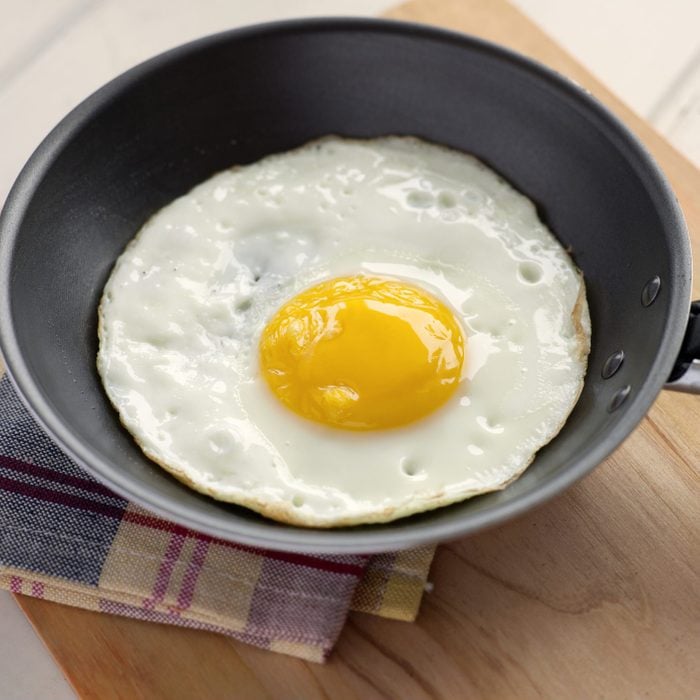
High Angle View Of Fried Egg In Frying Pan
Silvia Elena Castañeda Puchetta/Getty Images

Eggs

Eggs are a quick and easy way to add vegetarian protein to your diet, whether you’re on the go or looking for a filling snack. There are 6 grams of protein in one whole egg. If you’re in a hurry, hard-boiled eggs or pre-made egg bites are an excellent choice. For breakfast options, you can’t go wrong with scrambled eggs, omelets or huevos rancheros.

11 / 13
Quinoa seeds in a wooden bowl with a spoon on a bamboo surface
Janos Varga/Getty Images

Quinoa

Quinoa is a nutty seed that tastes like a grain. It’s rich in protein, fiber and folate. One cup packs 8 grams of protein. Try swapping your usual side dish for quinoa patties, or make it the main event with a filling quinoa salad. Quinoa in breakfast bowls rivals any version made with potatoes!

12 / 13
Cottage cheese or curd cheese
Arx0nt/Getty Images

Cottage Cheese

Cottage cheese is a protein powerhouse with 25 grams per cup. Try topping a bowl with fresh berries for a quick breakfast or snack. You can also use cottage cheese in many of your favorite recipes to pack in extra protein and calcium. Start your day with fluffy blintz pancakes, then whip up these healthy spinach and broccoli enchiladas for dinner.

One of the Healthiest Fruits to Include in Your Diet and How Eating a Few Daily May Support Your Body

by


For centuries, dates have been valued across cultures for their natural sweetness, long shelf life, and nourishing qualities. Often enjoyed as a convenient snack, this fruit offers a unique combination of carbohydrates, fiber, and essential nutrients that fit easily into everyday eating habits. Their naturally sweet flavor makes them appealing, while their compact size allows them to be consumed in small, satisfying portions.

From a nutritional perspective, dates provide several minerals that support normal body function, including potassium, magnesium, and iron, along with small amounts of key vitamins. Their natural sugars serve as a quick source of energy, but unlike highly processed sweets, the fiber in dates slows digestion. This helps create a more gradual release of energy, which many people find supports steadier focus and fewer energy crashes throughout the day.

Fiber is one of the most notable components of dates. Adequate fiber intake plays an important role in digestive comfort and regularity when combined with proper hydration and a balanced diet. Because fiber also contributes to a feeling of fullness, dates may help reduce unnecessary snacking and support more mindful eating patterns, especially when enjoyed as part of meals or paired with protein-rich foods.

Beyond fiber and minerals, dates contain naturally occurring plant compounds that add to their overall nutritional profile. These compounds, along with their mineral content, allow dates to fit well into heart-conscious and energy-supportive eating approaches when consumed in moderation. They can be eaten on their own, chopped into meals, or blended into snacks without the need for added sugars.

And this is the key takeaway: including just a few dates per day can be a simple, natural way to support energy, digestion, and overall nutritional balance—making them one of the healthiest fruits to regularly include in your diet.

PEOPLE WERE SHOCKED BY THE STRANGE ITEMS THEY SAW, BUT THE INTERNET HAD THE ANSWERS!

by


The modern home often feels like a museum of forgotten technology. We inhabit spaces designed by previous generations, filled with architectural quirks and mechanical oddities whose original purpose has long been lost. When peeling back the wallpaper of an old fixer-upper or cleaning out the attic of a deceased relative, we frequently stumble upon objects that defy immediate explanation. Nowadays, the internet has become a collective laboratory for solving these domestic mysteries, as homeowners turn online to decode the “bizarre” and “mysterious” items tucked away in their homes.

One of the most common sources of confusion in vintage houses is the presence of small, unusual apertures within larger structures—specifically, the “door within a door.” To the uninitiated, these miniature hinged panels set at eye level in heavy wooden front doors might seem whimsical or perhaps intended for a pet. However, as Reddit user 3rdCoastTxn and others have explained, these features had a practical purpose: security and communication.

Officially called a “speakeasy,” these small doors became widespread during the Prohibition era in the United States, though their origins extend further back. The speakeasy allowed homeowners to verify a visitor’s identity or have a brief conversation without compromising the security of the main door. In an age before digital doorbells and wide-angle peepholes, this was the gold standard for controlled interaction—a literal window to the outside world while keeping the private realm protected. Today, most serve purely aesthetic roles in Mediterranean or Tudor-style homes, but they remain a fascinating reminder of a time when the home’s threshold was a carefully guarded boundary.

It isn’t only architectural features that puzzle modern residents; often, the strangest discoveries are mobile. Consider a couple who, after moving into a new apartment, found a contraption so perplexing they documented it online. It consisted of rolling wheels and tension bars, resembling a medieval torture device more than household equipment. After hours of speculation—from a specialized pasta maker to a leather-stretching tool—the answer emerged: it was an early version of a high-intensity ab roller.

This highlights a recurring theme: the “fitness fad” artifact. Just as future generations might look at vibrating massage guns or high-tech stationary bikes with confusion, we are currently rediscovering the remnants of mid-century health crazes. These machines, often heavy and steel-framed, represent the human desire for shortcuts to physical perfection, eventually relegated to closets, awaiting rediscovery decades later.

Another enigmatic category of household mysteries is “industrial artifacts” uncovered during renovations. One homeowner shared an image of a six-inch metal pin with a stone-like weighted end, found behind a baseboard. Initially, a Google search suggested it was a simple structural pin, but online enthusiasts dug deeper.

These items, it turns out, were often “drift pins” or alignment tools left by builders. In early 20th-century construction, as framing became more complex and steel reinforcements were introduced, these pins aligned bolt holes in structural members. Finding one behind a wall is like discovering a lost hammer or paintbrush—a ghost of the labor that built the house. The “stone” end, often made of lead or zinc, prevented sparks when it contacted steel, a safety measure in dusty construction environments.

The fascination with these objects points to a deeper psychological impulse. Humans are naturally unsettled by the unknown, especially within their private spaces. Finding an object we cannot identify creates a “cognitive itch.” The internet transforms this itch into a global game of “What Is This Thing?” where specialists in everything from Victorian plumbing to Cold War electronics lend their expertise to strangers.

In one viral case, a user found a small lead-lined box embedded in brickwork near their back door. Initially feared to be a hazardous waste container, historians identified it as a “milk box.” Before refrigeration and 24-hour supermarkets, milkmen delivered glass bottles early in the morning. These insulated boxes kept milk cool and protected from the elements (and curious cats) until the family awoke. Today, they might hold spare keys or mail, but they recall a daily infrastructure that once felt as essential as the internet does now.

Even the most mundane items can have fascinating histories. A heavy metal ring in the sidewalk outside an old townhouse was a hitching post for a horse-drawn carriage. A small wooden door near a kitchen floor wasn’t a “mouse hole”; it was a flour chute or dumbwaiter, used to move supplies from cellar to pantry.

What the internet provides is more than identification—it provides a connection to the past. By identifying a speakeasy, an antique ab roller, or a structural drift pin, we trace the evolution of human needs. We see how ancestors prioritized security, obsessed over health, and built their world. These strange objects are historical “footnotes,” tucked into basements and behind doors.

The lesson of these household discoveries is curiosity. The next time you see a metal plate on the floor with no obvious purpose or a handle that leads nowhere, don’t assume it was a mistake. Behind every strange object is a person who found it useful, a designer who thought it clever, and a story waiting for someone with a camera and Wi-Fi to bring it back to life.